What is Non-Destructive Testing (NDT)?

Non-Destructive Testing (NDT) is a collection of methods and techniques used to examine the properties of materials and components without causing any damage or altering their appearance. This method is used to detect and examine defects and damages in materials and components with high precision in industries such as construction, aerospace, automotive, aviation, and oil and gas.

what is a non-destructive test

Non-Destructive Testing (NDT) Laboratory

Sakht Pooshesh Company, with over several decades of experience and expertise in performing various non-destructive tests on both large and small scales, is one of the leading companies in the field of non-destructive testing in Iran. The use of a specialized team, alongside the application of specialized knowledge and modern global technologies, has led to high-quality solutions for addressing defects and issues in various materials and industrial components. Furthermore, you can directly communicate with our experts if you have any questions.

types of non-destructive testing

Non-destructive testing (NDT) has various methods, each suitable for specific industries and applications. Below, we will introduce each of these methods from the Sakht Pooshesh website.

ازمایش تست غیر مخرب

Electromagnetic Testing (ET)

It includes methods such as Eddy Current Testing, which uses electromagnetic induction to detect defects in conductive materials. This method is widely used in aircraft maintenance and repair, as well as in the inspection of thin-walled pipes.

تست NDT

Liquid Penetrant Testing (PT)

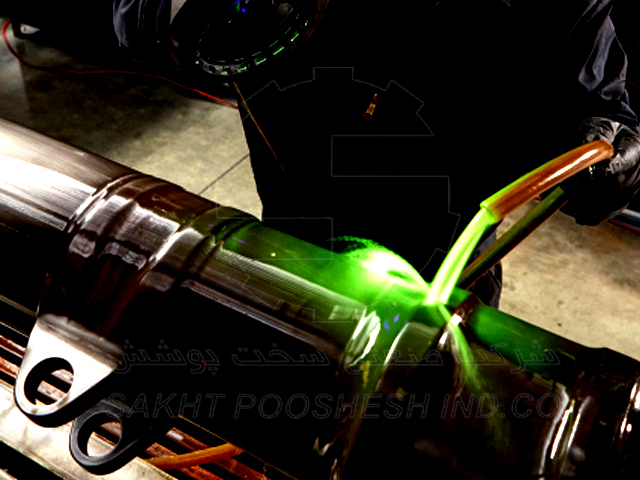
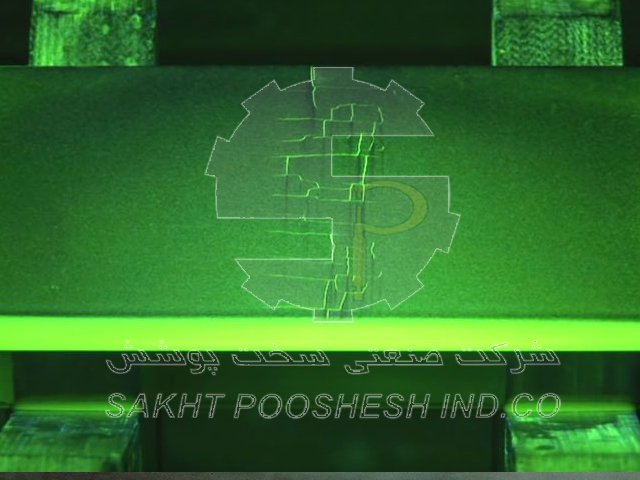
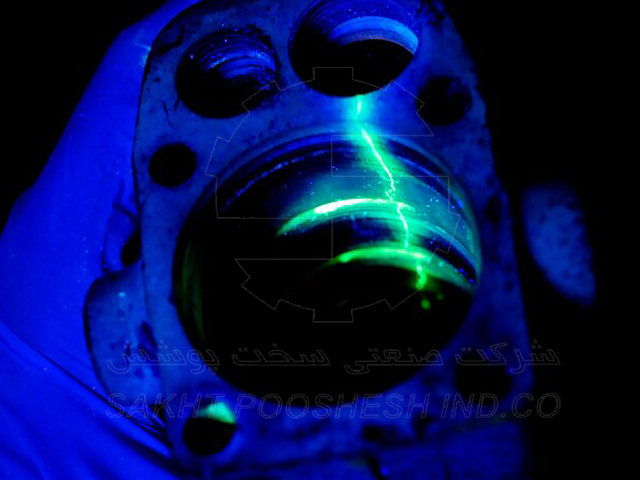
It is used to detect surface defects in solid and non-porous materials. In this method, a penetrant liquid is applied to the surface, which seeps into cracks and cavities. These defects become visible under ultraviolet or visible light

تست غیر مخرب NDT

Magnetic Particle Testing (MT)

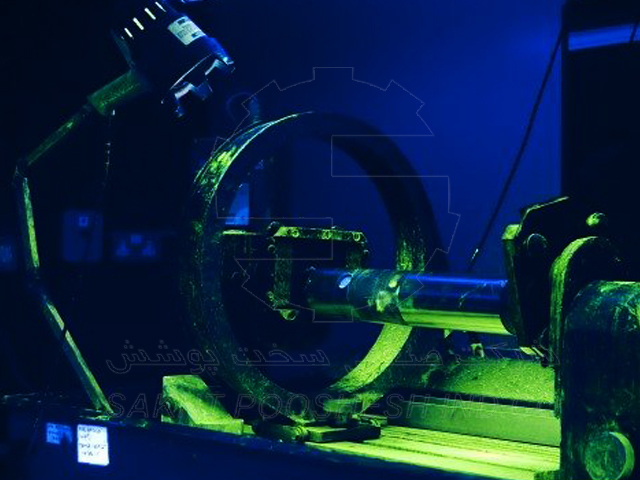
This method is used to detect surface and subsurface discontinuities in ferromagnetic materials. In this process, the part is first magnetized, and then ferromagnetic particles are applied. Areas with defects or cracks become clearly visible.

Ultrasonic Testing (UT)

In this method, high-frequency sound waves are used to detect surface and subsurface discontinuities. The waves are reflected after encountering boundaries or structural changes. By analyzing these reflections, the location and size of the defect can be accurately determined.

Visual Testing (VT)

It is the simplest and most basic method of non-destructive inspection, where the component is directly examined with the naked eye or with optical tools. This method is typically performed as the first stage of inspection before applying other NDT techniques and can reveal early signs of surface defects such as cracks, corrosion, or surface irregularities.

Radiographic Testing (RT)

In this method, X-rays or gamma rays are used to create images of the internal structure of a component. This technique allows for the detection of internal defects and discontinuities without the need for cutting or destroying the part. Radiographic testing is especially widely used in quality control of welded parts and mechanical assemblies.
Advantages of Non-Destructive Testing (NDT)

This method has advantages in the industry, which has led to the use of various NDT methods. Below, we will introduce and discuss each of these advantages:

  1. Prevention of Unexpected Failures: By using NDT methods, potential defects and issues can be detected before serious failures occur in equipment, allowing for preventive actions to be taken.

  2. Safety Protection: Many industries, especially in sectors such as oil and gas, power plants, and aerospace, which deal with critical equipment, use NDT to check safety and prevent potential accidents and hazards.

  3. Cost Reduction: Early detection of issues and defects enables preventive maintenance and repairs, which ultimately leads to a reduction in major repair costs and production downtime.
  4. Increased Equipment Lifespan: Through timely evaluation and maintenance, the useful life of equipment can be improved, resulting in higher productivity
  5. No Need for Destruction: The most important feature of these methods is that they provide accurate and reliable information without causing any damage to the material or component structure.

  6. ChatGPT can make mistakes. OpenAI doesn’t use Workspace von Donald Strauser workspace data to train

 Comparison of Types of NDT Testing Methods

In the following, we will compare and review the different Non-Destructive Testing (NDT) methods from the Sakht Pooshesh website, which is a non-destructive testing laboratory in Iran, to fully compare and examine all the methods.

NDT Method Method of Execution Main Application Limitations / Notes
RT Test
Exposing the piece to X-rays or gamma rays and recording its internal image.
Exposing the piece to X-rays or gamma rays and capturing its internal image.
Requires high radiation safety, costly, and heavy equipment.
UT Test
Sending high-energy sound waves and analyzing the echoes.
Measuring thickness, detecting subsurface and internal defects in metals and pipes.
Requires a skilled operator, sensitive to surface roughness and the shape of the piece.
MT Test
Magnetizing the piece and spraying magnetic particles on the surface.
Detection of surface and near-surface cracks in ferromagnetic metals (such as steel).
Limited to magnetic materials, unable to detect internal defects.
PT Test
Applying a penetrant dye or fluorescence to the surface and observing the area of accumulation
Detection of surface cracks and discontinuities in metals and non-metals.
Only for surface-breaking defects, requires complete surface cleanliness.
ET Test
Creating eddy currents with a magnetic field and measuring their variations.
Inspection of surface cracks, corrosion, and coating thickness in conductive materials (aerospace, automotive).
Only for conductive materials, limited penetration depth.
MT Test
Using radio waves and a magnetic field (similar to MRI).
Detailed internal inspection in critical industries such as aerospace and power plants.
Very expensive and complex equipment, limited applications.

Applications non destructive testing ndt 

NDT testing is used in various industries. The reason for using this technology is to reduce potential costs and increase efficiency. Sakht Poushesh, with its NDT testing laboratory, is one of the leading companies in this field in Iran, offering services in the following industries. The following sectors are among the most important industries that use non-destructive testing for identification, repair, and performance improvement.

  • Oil and Gas Industry: Used for inspecting pipelines, storage tanks, and equipment involved in the storage and extraction of oil and gas.

  • Aerospace Industry: Used for examining aircraft wings and engine components, as well as in the repair of engine parts alongside shot peening operations.

  • Automotive Industry: Used for testing and evaluating vehicle engine parts, as well as inspecting fuel tanks, bodies, and safety and suspension systems in leading automotive companies.

  • Construction Industry: Used in high-rise structures such as buildings, towers, and large bridges, with NDT testing applied to assess the quality of components.

  • Energy Industry: Used for inspecting power plant equipment, turbines, and electrical transmission systems.

Sakht Pooshesh NDT Test Samples

Leave a Reply

Your email address will not be published. Required fields are marked *

Scroll to Top